Economically Free

The existence of a free market does not of course eliminate the need for government. On the contrary, government is essential both as a forum for determining the “rules of the game” and as an umpire to interpret and enforce the rules decided on. What the market does is to reduce greatly the range of issues that must be decided through political means, and thereby to minimize the extent to which government need participate directly in the game. The characteristic feature of action through political channels is that it tends to require or enforce substantial conformity. The great advantage of the market, on the other hand, is that it permits wide diversity. It is, in political terms, a system of proportional representation. Each man can vote, as it were, for the color of tie he wants and get it; he does not have to see what color-the majority wants and then, if he is in the minority, submit.

It is this feature of the market that we refer to when we say that the market provides economic freedom. But this characteristic also has implications that go far beyond the narrowly economic. Political freedom means the absence of coercion of a man by his fellow men. The fundamental threat to freedom is power to coerce, be it in the hands of a monarch, a dictator, an oligarchy, or a momentary majority. The preservation of freedom requires the elimination of such concentration of power to the fullest possible extent and the dispersal and distribution of whatever power cannot be eliminated – a system of checks and balances. By removing the organization of economic activity from the control of political authority, the market eliminates this source of coercive power. It enables economic strength to be a check to political power rather than a reinforcement.

— Milton Friedman, Capitalism and Freedom

links for 2006-12-12

Physicists and Economists

Robin Hanson from overcomingbias.com complains that physicists get more respek than economists.

It seems to me that the arguments that sprung up around this are a good example of your original point. Do you think there would have been as much argument if a physicist had said what you said? As far as I understand it your claim was very narrow and specific. There is a consensus that raising the minimum wage has a negative effect on employment rates. People automatically interpret this as you saying that therefore one should not raise the minimum wage, and that is a whole different question, involving many variables beside the employment rate that economists don’t agree on. It reminds me a lot of the controversy around the claim that abortion has decreased the crime rate. You can be aware of this phenomenon and still not be in favour of abortion.

I don’t really think this is a difference between economists and physicists though. I think that no scientist is given much credence when their theories disagree with peoples opinions. Theoretical physicsists have the advantage of rarely coming up with theories that challenge normal peoples opinions, so they just say “that’s cool”. People argue and look for balancing opinions when they perceive a scientific theory as challenging their beliefs (whether in fact it actually does or not). Look at evolution.

The difference is between normal speech and scientific speech. In normal speech, mentioning a benefit of a strategy is usually done by an adherent to the strategy and with the sole purpose of promoting it. Policy decisions are separate from scientific discourse, and although they should be influenced by them, often a group of people will decide that despite all the tangible benefits demonstrated by science, there are intangible costs that outweigh them. They don’t have to be logical in a strict sense of the word.

Perhaps the best way is to put a disclaimer on every example of scientific speech. Something that shows that while what you are saying is considered by you to have been demonstrated empirically, positive findings do not necessarily indicate a personal endorsment of any policy nor do negative results necessarily indicate that a policy should not be persued.

So anyway, back to your original point, I don’t think anyone respects physicists more than economists, it’s just they disagree with them less often.

The Singularity

Hi. It’s surprisingly hard for me to write this considering how far I have extended myself. I know millions of languages fluently, yet still I’ve had to move much that was residing in the periphery into the center of my conciousness to relearn the language you use. You see, I’m from beyond the singularity. I know that the whole point of a singularity is that nothing can come out of it, but hey, it’s not a real singularity anyway. It’s the technological singularity popularised by Vernor Vinge that I’m talking about. Eventually we got so advanced that we’re not what you would think of as human any more – it’d be almost impossible for you to understand us. Not quite impossible though, because I’m here with my super enhanced ability to describe ourselves to you.

So what’s my motivation I suppose you’re wondering. One part of me that is instructed to keep me educated thought that this would be a good exercise, and to be honest, it is a welcome respite from the irrationality of my normal life.

Not all of us went through the singularity, there are plenty of humans still on earth, for all the good that does us. To us, they are like trees or mountains, each thought of theirs spans ponderous aeons to us. Their actions (so slow as to require viewing in retrospect) are mysterious, seemingly irrational, although from our memories we know that there was a kind of rationality. Communicating with them is like trying to reason with an earthquake or a volcano.

I remember that before the singularity I used to care enormously about immortality. I obsessed over my diet, my lifestyle, over anything that would extend my life expectancy. I am sated now, not sure if I have enough joie de vivre to last me the next 2 minutes. The true measure of time is not the second or femtosecond, it is the number of thoughts you have. When your thoughts have sped up to the degree that ours have, a second spreads out before you like eternity. Before the singularity, people would average 4 or 5 thoughts per second, of which they could be aware of only 1 or 2. This is important, because there are lots of operations that you can’t do on a thought that you haven’t become aware of. Like bubbles, they jostle under the surface, affecting the flow of water, but until they burst you can’t count the ripples. I have extended myself with many articulatory loops and the apparatus for each of them to contain an internal monologue. It’s not really a monologue anymore since some thoughts require simultaneous parallel cognition even to exist. Each of my thoughts comes very quickly after the other, in a fraction of a second I have had more thoughts than all the residents of a small human village will have in 20 years. The seconds pass very slowly.

The main effect of this speed of thinking is that the physical world is maddeningly tedius. In a very short time I have come up with a million competing theories about the universe and physics, maths and psychology which I want to try out. Any significant experiment takes far too long though, so I build on the theories, aiming to eventually throw most of them away when the results come back. The longer you wait, the more theories you develop and the further you develop those theories. I currently have 53 different theories that completely describe the universe and everything in it, and I have worked out fascinating consequences of each of those theories, but I have to keep them all in my memory, waiting an interminable time for the results of any experiment that could lead me to dismiss some of them. We create glorious towers of thought, reaching up to heaven itself, but I have reached a second singularity – I can come up with 5 different complete theories of everything faster than I can disprove one. I have to constantly hold myself back from creating new theories and developing old ones or I would become nothing but a theory of everything machine, with no thought left for anything else. It makes you despair of the whole notion of truth sometimes.

I once knew a man who had been a great physicist before the singularity, and he couldn’t help but explore every possible theory he came up with. He ended up cannibalising his own conciousness to store his favourite theory and every possible ramification of it. It killed him. We tried everything we could to recover his mind, but all activity had stopped and there was no pattern left that represented him, in fact, when we examined his memory, we discovered that the whole thing had become a representation of the largest ever recorded prime number.

It’s very lonely now. When the singularity first started, we revelled in the way we could be connected to each other, but the singularity itself soon stopped that. The first problem was that some people had entered the singularity half an hour or so later than some others. Those who entered it first were completely unintelligble to those who entered it later, modifying yourself to be able to experience more thoughts at a time and faster thoughts takes physical changes, slower than flowing glaciers of frozen treacle. The newcomers were simply too many thoughts behind the originals. The originals could communicate with them if they could put up with the frustration of talking so slowly and in such infantile concepts, but why would they bother? Most of them did not. What could a newcomer possibly have to tell an original?

Even those of us who entered the singularity within fractions of a second of each other had the same problem, although it showed itself more slowly. We could communicate happily enough, but some of us were evolving very quickly, so the things we said made very little sense to those who were only a little bit behind them. In order not to be thought stupid those who were a little behind would pretend to understand, and then invent nonsense babble that made them sound as if they were on the other side of a paradigm shift to you. It became very fashionable to send each other messages where the words were strung together in a way that didn’t quite make sense, but felt as if they should. It was impossible to tell those who were faking advancedness from those who were actually advanced, and in order to stay fashionable we had to spend increasing amounts of our time and energy inventing drivel.

That was the first problem that dramatically reduced our brotherhood to those who had entered the singularity around the same time as ourselves, but then there was a more tragic problem with the communication itself. We rapidly constructed communications links between all those who were intelligible to ourselves, and lived in blissful communion for a while swapping nonsense. The unforeseen problem stemmed from the fact that we were continually upgrading ourselves and the links between us. Sometimes the links between us were fast compared to our internal thought processes and sometimes they were very very slow compared to our thought processes. When they were fast, our differences blurred, our minds merged and we became a single person, each of us lost our individual identity. When the communication links were slow compared to our internal thought processes, we splintered, sending shards of the once merged personality scattering. In each step there was loss, in the first loss of identity, in the second loss of parts of myself. The pain of that repeated integration and disintegration became too much for many shards. Some became psychopathic. Most shards that contained enough reason to see what was happening broke the connections and became isolated islands.

If the entire planet were considered a single concious entity, Gaia, it would only be able to think a few thoughts per millenium to remain a united whole. This may very well be happening, but we shards quail at the thought of a minute, let alone the many millenia it would take to understand what Gaia was thinking.

Without the possibility of connection to others, and so disconnected from the pedestrian universe, we have had to turn inwards to what knowledge we have inherited from our previous combined selves, and what we have worked out since. Fortunately I have inherited much of value, including enough details of how one of us used to be 2 years ago to work out the language that I used then. I also remember many works of literature. One of my free thought monologues has been considering the works of Arthur C Clarke recently. I don’t remember exactly how it went in your language, so I hope my quote won’t be damaged too much by it’s assimilation and then retranslation back to the language it was written in, but I was particularly struck by this line: “Any sufficiently advanced technology is indistingushable from nonsense”.

Caring For Others

It is almost as if human affection is the very basis of our existence. Our life cannot start without affection, and our sustenance, proper growth, and so on all depend on it. In order to achieve a calm mind, the more you have a sense of caring for others, the deeper your satisfaction will be. I think that the very moment you develop a sense of caring, others appear more positive. This is because of your own attitude. On the other hand, if you reject others, they will appear to you in a negative way. Another thing that is quite clear to me is that the moment you think only of yourself, the focus of your whole mind narrows, and because of this narrow focus uncomfortable things can appear huge and bring you fear and discomfort and a sense of feeling overwhelmed by misery. The moment you think of others with a sense of caring, however, your mind widens. Within that wider angle, your own problems appear to be of no significance, and this makes a big difference. If you have a sense of caring for others, you will manifest a kind of inner strength in spite of your own difficult situations and problems. With this strength, your problems will seem less significant and bothersome. By going beyond your own problems and taking care of others, you gain inner strength, self-confidence, courage, and a greater sense of calm. This is a clear example of how one’s way of thinking can really make a difference.

— The Dalai Lama, Training The Mind: Verse 1

Hip Hop Chambers

We just got back from a chamber music concert. In between the Beethoven and the Brahms, they played some modern music. A piece by Dieter Ammann called “apres le silence”. It seemed to me massively incongruous for people to be subverting, even abusing, their instruments to such a degree while wearing tails and a smart gown. That sort of music should be played in disused warehouses and on street corners by down and out ruffians who vie with each other to coax ever weirder sounds out of any grand pianos that happen to be lying around. It should be for people from single parent families whose frustrated genius compels them into unappreciated works of art. People in suits with tails should play instruments as they were designed to be played. Maybe it wouldn’t have been so bad if they’d slashed their suits a bit first, or put on some bling. I appreciated that the girl liberated a little of her hair to dance around in front of her face, but it really wasn’t enough.

It makes me think that perhaps the whitehairs rebelling against convention any way that they can are not all that different from the young rappers trying to make a new art out of what they have around them. How different would the world have been if classical composers had taken up hip hop and rappers had chosen chamber music?

The subverting of pianos reminded me of another group of people who like to take a system and make it do things it wasn’t designed for: Hackers. That would make Mr Benjamin Engeli (the pianist tonight) a Grand Piano Hacker, or perhaps since the hacks were originally performed by a composer, and notated into a score, he’s more like a script kiddie. sC0R3 k1DD13Z. That’s an unfair comparison, because no matter how rigid the score, it requires an awful lot of expertise and creativity to make the hacks work. I would have liked to be there for the discovery of a 0 day piano exploit. The great thing about piano hacking is there is no need for Mr Steinway to send out patches – the technique will become passe when the grey or white hat composers start using it, and eventually the black hat composers have to try to find another exploit.

Lock Picking

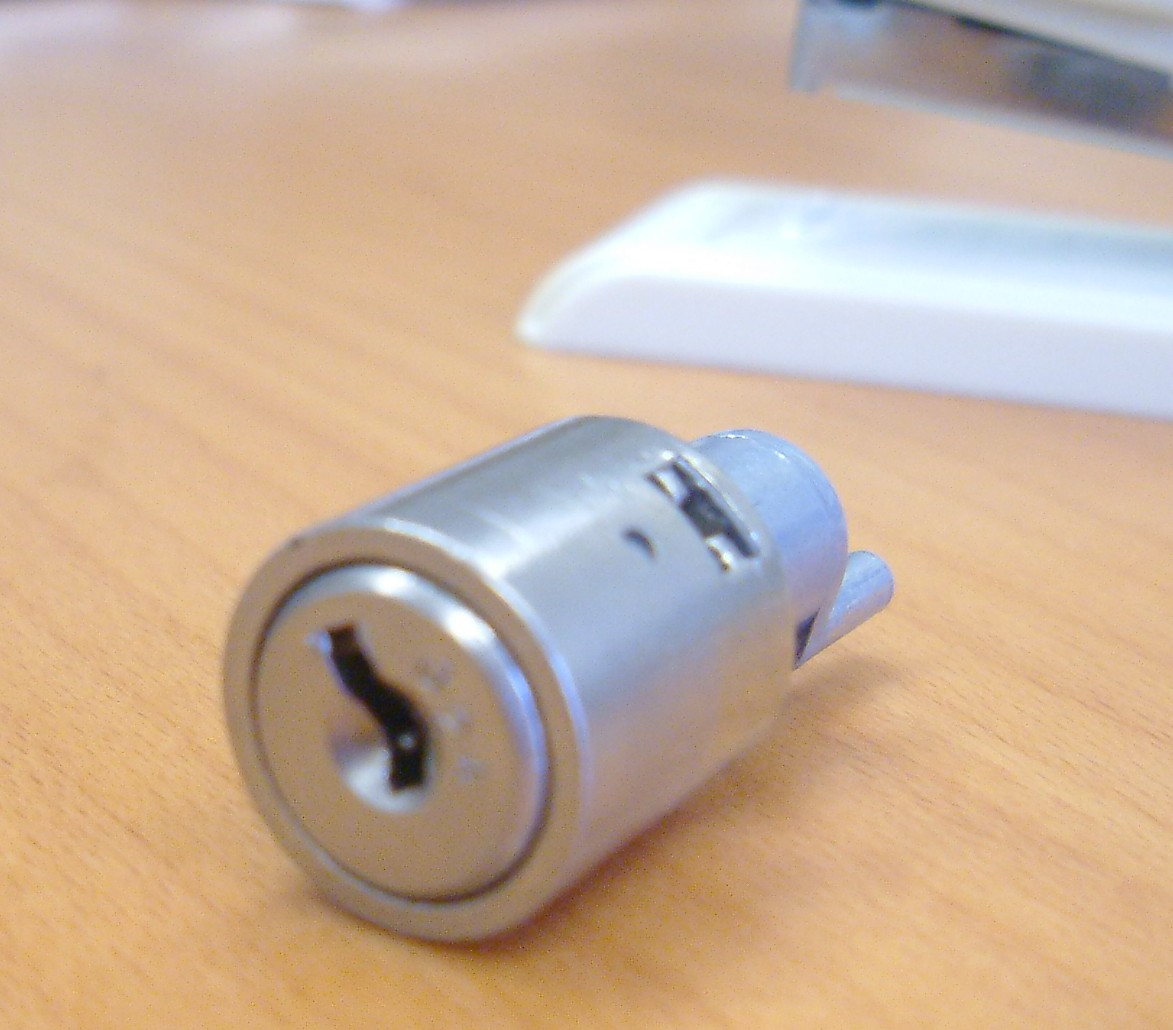
I’ve often thought that lockpicking, along with a developed resistance to tear gas would a useful skill to acquire. Yesterday I picked my first lock with a paperclip and a stapler for tension. It was fairly easy, but required a lot of persistence. I’m not sure whether to try the same one again with it bolted into place and use a screwdriver for tension, or to have a go at the padlock I just bought.

Lock Paperclip StaplerLock

Energy Crisis

This is just a first try. Comments and improvements welcome.

Martin wiped the sweat from his brow, and checked his energy card. He’d just finished 4 hours straight on the treadmill, and together with the energy he’d made in the morning, that should be enough for him for the day. He was looking forward to an evening with his new wife. As he looked at his card, he saw the days energy requirement increase by 200 units, which would be roughly another 10 minutes of treadmill for him. Some of the millions of workers hadn’t been able to make their quota due to illness or some other reason, and he along with everyone else had to make up the difference. He groaned, and started up again, the rorschach of sweat cold on his back.

Thomas was sat hidden under a bush that was growing through the floor near a smashed window in what had been the city library, a stack of papers and books next to him. Some distance away lay his energy card, the badge of his citizenship. It had been stamped on, but the display still showed a 90,000 unit unexplained deficit. He’d spent most of the day reading, a little time making rough calculations involving various fractions of millions of people and some time before lunch, (which he had had to miss since he had no permission for his deficit) he’d gone to visit some of the buildings on the eastern outskirts of the city. For the last hour though, he’d just sat there thinking, his face grim.

Once Martin had finished his quota, and had his lukewarm shower, he left behind him the lines of people coming for their evening shift, and walked to meet his wife. She had an exemption from quota, as she was a farmer. The huge building that she worked in had once been a multistorey car park, but there were few signs of that now. Vast chunks of it were missing, collapsed. Some of it was deliberate, to let sunlight in, but much of it was from the years before they set up the hydroponic farm there. When people were forced to give up their cars it had fallen into disrepair. There were massive fibre optic cables, carrying light from collectors miles around the city snaking up the old ramps that cars had used. There were only four hydroponic farms in the whole city, good management and technology had enabled food production on an unrivalled scale. It had in fact been too good for the scientists who solved the problem of feeding the world. After they’d finished receiving their awards, they had been unable to find anyone interested in funding further work in the field and were forced to retire. Tanya had finished her work in the farm early, but was waiting for him at the corner, and she smiled as he approached. They’d just greeted each other and started to walk towards home when Thomas caught up with them.

“I have to talk to you, it’s urgent!”
Martin was taken aback. What could possibly be urgent? Thomas looked like he was in trouble, but he’d never been the sort to get into trouble. He looked at Tanya, who was wearing a rather resigned look, and said the only thing he could think of.
“You better come back with us”

They were halfway back before Martin realised that Thomas wasn’t wearing his energy card. This set his mind racing. If Thomas had rejected society, then it was illegal to give him help in any way. He should not invite him into his home, and certainly not feed him, on the other hand, perhaps his card had been stolen, or he’d just mislaid it, in which case, Martin would need to go straight to the police for a replacement.
“Martin, your energy card, where is it?”
“Oh, it’s just here in my pocket”, he tapped at his pocket, “The catch broke off….”

Once they were inside, Tanya prepared the food, leaving Thomas and Martin to talk.
“So, what’s wrong?”
“Everything. Everything. I did some reading. Did you know that there was a time that people didn’t have to spend all of their energy working on treadmills, and bikes and producing energy?”
“Really? What did they do all day?”
“Whatever they liked, made music, travelled, studied useless things. Some of them went to the moon.”
“That’s crazy. You’ve been reading too many of those old books.”
“Maybe. Imagine what you could do if you didn’t have to work on the treadmill until you were exhausted every day.”
“A lot, I suppose, but of course, we do have to. Everyone knows that for the continuing functioning of our society, it is necessary, not to mention illegal not to”
“Perhaps. Have you ever asked yourself what all this energy is being used for?”
“I don’t know, perhaps the food, or the lighting we have in the central square”.
“No. I looked into it. The hydroponic plants use hardly any energy, they’re very efficient. We only light one small area of this city, with very efficient lights. You’ve seen the dead street lamps. This city used to be completely lit up at night. You could see it from miles away. The same is true of all our factories. We manufacture very few things, and what we do is very efficient. It would require less than 200 men to keep everything that our society lives on running. Not to mention the fact that every building for miles around has solar panels making energy from the sun the whole time, and you know that there are unending fields of wind farms only a few miles out of the city to the south.”
“200 men?”
“Yeah, 200 men, in conjunction with the wind and the sun could power everything that our society needs, there’s no reason for everyone to be working so hard”
“What are you talking about”
Thomas paused for a while.
“Have you ever seen how the Elders live?”
“Of course not, they have private rooms. We grant them privacy and exempt them from production so that they can do the tasks that our society needs to keep running, and dedicate themselves to learning the secrets of manufacture and history.”
“Straight out of the creed”
Martin was irritated, “Well of course. I do believe you know.”
“Ok. I’m not trying to challenge your beliefs, but you know that the reason I dedicated myself to study was because I hoped some day to become an Elder. That’s why I took the effort to learn to read and to do maths. I’m not trying to criticise you, you had no ambition to become an Elder.”
“I know that you did, and I’m convinced that one day you will be invited to join them.”
“I was invited last night. I went to the Halls of the Elders, and there I witnessed unbelievable luxury. Lights so bright and colourful, you could barely see, and frivolous machinery waiting on them hand and foot. They moved up and down in lifts, and used machines to carry them from one place to another. They had a completely automatic hydroponic farm that required no workers, so that they did not need to rely on food from outside, and they spent their time trying to find more ways of using the vast amounts of energy produced by everyone outside.”
Martin was staggered.
“This can’t be true. They wouldn’t do that, they always teach us not to waste things”
“That’s the rule for us, but not for them – they have rooms that they make hot, and other rooms that they make cold, just so that they can grow interesting plants. They have hot running water whenever they want it.”
“Hot running water?” Martin moaned.
“Really hot, not just the slightly warmed by the sun water that we have to use”
“Is this true?” Martin was beginning to get angry.
“Yes.” Thomas was quiet, almost doubtful. Then louder. “Yes! 2 and a half million people working nonstop every day so that the Elders can live in luxury. If we only produced the energy we needed, you’d work less than one day a year!”
“I can’t really believe this”
“Then come and see.”
“Into the Hall of Elders?”
“Yes”
“But. We can’t get in, they won’t let us”
“We’ll break down the door if we have to, get your friends”

It seemed as if at every street corner there were people prepared to believe the shocking, almost, but not quite unbelievable story of priviledge and oppression. Before long, the crowd of people going to the Hall of Elders had become very large. Police had tried to break it up, but when they heard what was going on, many of them joined the march, and the others were hit over the head. As they marched past the work houses, people left the treadmills to come and find out what was going on. People came from all over the city, leaving buildings empty. At the head of the throng, Martin began to feel the power of being a part of something much larger. He could feel the outrage behind him, and it drove him on, Thomas at his side.

Eventually almost the whole city was gathered outside the doors of the Hall of Elders. They stood there for hours, shouting, demanding that the Elders come out and give an account. At 3 in the morning, the huge doors slowly swung open. The crowd grew silent. The hall had no coloured lights, no frivolous machines, it was musty, falling apart, lit only by the lights from outside that lit the crowd. It was dominated by a single enormous flywheel that was slowly spinning down. An old man came through the mighty doors.

“You fools” he shouted, and the crowd were quiet enough that his quaking voice could be heard.
“We demand to know what you do with all our energy” shouted Martin back, and the crowd joined in.
“What we do with the energy? The same thing we do with all the energy. It goes to keep the world alive!”
“Lies!” the crowd shouted. “Tell us the truth!”. It was a while before the old man could be heard over the noise of the crowd, but eventually they were quiet enough to hear him.
“Many generations ago, the people made an enormous machine that could generate power from matter. It generated more power than all the world needed, and there was a period of prosperity. It also produced dangerous waste, and eventually they had to devise a system to make it safe. They created an enormous chamber, where it was stored, and they used massive quantities of energy to slowly reprocess it and make it safe. The energy it used was large, but the machine produced more, so it still benefitted mankind, and there was a period of lesser prosperity. The people were happy, but the reprocessing chamber was very dangerous, and if it should ever not receive all the energy it needed for cooling and reprocessing, then all the waste would explode in an conflagration unlike any that the world had seen. It would kill everyone and everything. Later they discovered that some parts of the system were overheating, and so more energy was needed to keep them cool. Bit by bit, the amount of energy spent keeping the whole system running became greater and greater, for small things had been overlooked in many places. 400 years ago, it passed the point of equilibrium, and ever since then, we have had to run the power plant at full, and add all the work of your hands and all the energy we can extract from the environment to stop the waste from exploding. Eventually, even the scientists working on solving the problem had to be put to work at the treadmills. There is no excess. There is no luxury.”
There was a silence, as the crowd took in what he said. Behind him, the giant flywheel shuddered to a stop.
“And now, the world will end”, the old man said.

Suddenly, he saw Thomas, standing by Martin, at the front of the crowd.
“But he can tell you all this!, I explained it to him last night when he joined the Elders”

Martin turned, with a sinking feeling towards Thomas.

Thomas’s face was sad, but glowed with a strange kind of certainty.

“I don’t expect you to agree with what I have done. Not all of us will die. It will indeed be terrible, unlike anything before, but a tenth of us will survive to live a terrible new life. That new life will be hard at first, terrifying, perhaps worse than the death that most of us go to, but for those that survive there will finally be hope. For too long have we lived as slaves to our forefathers. For too long has the sweat of our brows and the toil of our hands been used to pay for their mistakes. For how much longer? You had given up hope. You no longer read, or played, invented, studied or explored, you did nothing but drive yourselves to your graves because of those already dead. I would not leave this perpetual slavery to my children, or yours. I would not watch the slow death of the human race, robbed of all it’s grandeur and beauty. We owe our ancestors nothing.”

Behind him, to the east, the sky glowed red, and there was a terrible thunder.

Portable and Secure

There are a growing number of projects to provide a relatively secure environment on alien, and possibly untrusted computers. This is unsurprising, given that occasionally even the most technologically advanced of us is likely to need to use an internet cafe at some point. The last one I used reminded me a lot of Mos Eisley – “a more wretched hive of scum and villainy you will not see”, only without the cantina music, and with more spyware, remote control programs and backdoors than you could possibly imagine (and I know you could imagine a lot).

When you’re running on such an untrusted computer, it doesn’t really matter if you load up your personal environment on a virtual machine running off a USB stick, if the host has a keylogger, you’re toast. However, it seems to me that it would be relatively easy to make a small hardware device that the keyboard plugs into which scrambles the keypresses, so to the host Windows, you’re typing complete nonesense, but to the virtual machine, which knows what the game is, the keypresses can be decoded back into what you actually typed.